voip
-
Step-by-Step Guide to SIPp : Build and Install from Source
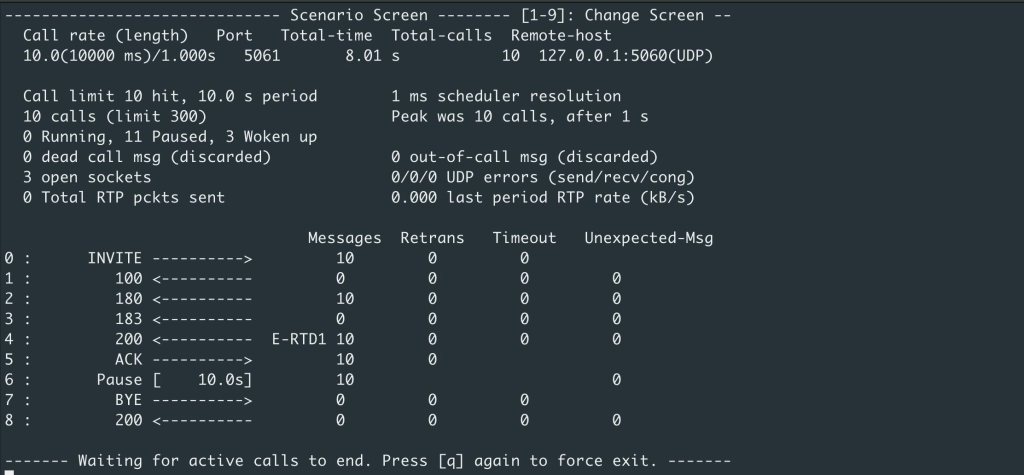
SIPp is a powerful open-source traffic generator for the SIP protocol. In this post, we’ll pull the latest release from GitHub, build it with your choice of features (SSL, PCAP, SCTP), and install the sipp binary under /usr/local/bin so it’s available system-wide. Continue reading
-
Janus Installation and Echo Test: A Complete Walkthrough

Janus is a general-purpose WebRTC server designed to be highly customizable and extensible. It acts as a bridge between WebRTC clients and various backend services or other communication protocols. Its power lies in its plugin architecture, allowing you to add specific functionalities (like SIP gateways, video rooms, streaming, etc.) without modifying the core server. In… Continue reading
-
Understanding LiveKit: A Deep Dive into WebRTC Communication

This article explores how LiveKit handles calls, from signaling to media routing. We also cover the ports and protocols involved in these processes. Continue reading
-
How WebSocket Works in WebRTC (With Trace Analysis and FAQ’s)

WebSocket is crucial for signaling in WebRTC. In this blog we dive deep to understand how WebSocket operates in WebRTC, starting from the TCP handshake to closeing connection. #webrtc #TCP #websockets #RTC Continue reading
-
Adding slack notifications to kamailio

This guide explains how to integrate Kamailio with Slack, enabling notifications to a Slack channel for VoIP events. It details steps for creating a Slack webhook, configuring Kamailio’s http_client and Slack modules, and using the slack_send function to notify on actions like IP address blocking and unblocking. Continue reading
-
PJSUA: Getting Started with the CLI Softphone

Dive into the world of VoIP technology with our latest blog post, “PJSUA: Getting Started with the CLI Softphone”. This comprehensive guide provides step-by-step instructions on installing and using PJSUA, a command line SIP user agent, on various operating systems. Whether you’re a VoIP engineer or just beginning your journey, our article demystifies the process,… Continue reading
-
Sipsak: Effective SIP Diagnostics and Testing tool

Here’s a comprehensive guide on how to utilize Sipsak for SIP diagnostics and testing Continue reading
-
Kamailio: Managing Logs Effectively

One of the many tasks that administrators frequently encounter is the effective management of logs. By default, Kamailio logs are directed to syslog. However, there may be scenarios where redirecting these logs to a separate file could facilitate easier management, analysis, or archiving. In this blog post, we’ll guide you through the steps to accomplish… Continue reading
-
Stir/Shaken: How to generate a SIP Identity header using Open-Source tools

In this article, we delve into the practical implementation of Stir/Shaken, specifically focusing on how to generate a SIP (Session Initiation Protocol) Identity header using open-source tools like Kamailio and OpenSSL. Continue reading
-
Stir/Shaken: Understanding the SIP Identity header

A key component of this protocol is the SIP (Session Initiation Protocol) Identity header. This article will delve into the intricacies of the STIR/SHAKEN protocol and the crucial role of the SIP Identity header. Continue reading
-
Sngrep: Mastering the Art of SIP Call Analysis and Debugging

Sngrep is a powerful yet user-friendly tool for monitoring and debugging SIP (Session Initiation Protocol) traffic in real-time or retrospectively. Continue reading
-
Configuring RTPEngine in Kamailio: A Quick Guide

Are you looking to enhance the performance of your Kamailio SIP proxy? Look no further! In this article, we’ll explore how to configure RTPEngine with Kamailio, a powerful combination that enables advanced media handling and network traversal capabilities. Continue reading
-
Different types of DTMF in SIP and why DTMF via RFC2833 is more reliable.

Dual-Tone Multi-Frequency (DTMF) tones are used for dialing, navigating automated phone systems, and other tasks. Continue reading
-
Most useful Kamailio commands
Kamailio has three inbuilt tools that can be used to manage and configure Kamailio. Although there are several commands within these tools, I am going to describe the most useful of them all. KAMCTL Common Commands: Command Description kamctl ul show User location in memory (registered users) kamctl ul show –brief Show in-RAM online users Continue reading
-
Build a SIP Registrar using Python with KEMI framework for Kamailio

#Kamailio #SIP #VoIP #Registrar #KEMI #OpenSource Continue reading
-
How Artificial Intelligence is Revolutionising the VoIP Industry

The VoIP industry has faced challenges like poor call quality and dropped calls, leading to the use of AI to improve efficiency and capabilities. AI can enhance call quality, reduce latency, and provide real-time voice translation. Here are some of the ways AI is revolutionizing the VoIP industry:Voice Recognition: AI technology can recognize the voice Continue reading
-
Best Practices for a Robust VoIP Infrastructure

This article discusses critical best practices that can significantly contribute to achieving a reliable and efficient VoIP infrastructure. Continue reading
-
Getting started with Kamailio Embedded Interpreter Interface (KEMI) framework using Python
Want to use Python scripting to process Sip messages in Kamailio? Checkout this article to get started. #Kamailio #OpenSource #KEMI #Python #Routing Continue reading
Recent Posts
- Real-Time Speech-to-Speech with OpenAI & Twilio: Full SIP Integration Guide
- Step-by-Step Guide to SIPp : Build and Install from Source
- Explore KittenTTS with Gradio: Easy Text-to-Speech
- Janus Installation and Echo Test: A Complete Walkthrough
- Chat with Your Kubernetes Cluster Locally: Setting up kubectl-ai with Ollama
 AI and VoIP Blog